Corn plantability is a fundamental concept for those who work in agriculture and want to improve their results in the field. This term refers to the ability to plant efficiently, ensuring that seeds are distributed evenly in the soil, at the correct depth, and with adequate spacing.
When you master corn plantability, you can avoid common problems such as planting failures (areas without plants) or doubles (plants too close together), which can significantly impact crop productivity.
Understanding the key aspects of corn plantability—how to calculate, define correctly, and apply effective strategies—is essential for successfully growing this crop, which is so important to Brazilian agriculture.
What is the definition of plantability?
Corn plantability can be understood as the degree of precision with which each seed is placed in the soil, respecting spacing, depth, and uniformity of placement. In other words, it is a measure of planting efficiency.
+ READ MORE: Industrial seed treatmenthow it works and what its benefits are
Good plantability helps plants to have similar conditions for development from the outset, giving them a better chance of receiving similar amounts of light, water, and nutrients, and growing more uniformly. This more uniform development is crucial because corn yield is directly linked to the number of ears per planted area.
+ READ MORE: Corn seed: the essential choice for a successful harvest
There are two main ways to assess planting quality: qualitative assessment, which visually analyzes how plants are distributed in the field, and quantitative assessment, which uses technologies such as GPS and sensors automatically and a tape measure manually to measure accuracy. For beginners, starting with visual assessment is already a good step, but investing in technology and technical planting monitoring can bring even better results.
How to calculate plantability?
Calculating planting efficiency involves verifying whether the established stand corresponds to expectations. The simplest way to do this is to count the number of seeds deposited in sample strips, which can be an important step in evaluating the result of plantability.
+ READ MORE: Corn seed treatment: understand how it works and its importance in planting
You can also assess the uniformity of the spacing between seeds. If they are too close together or too far apart, this affects overall performance and can impact your productivity.
What is the distance between corn plants?
Spacing is a critical factor for successful corn planting. The distance between plants directly influences competition for nutrients, water, and light.
Line spacing:
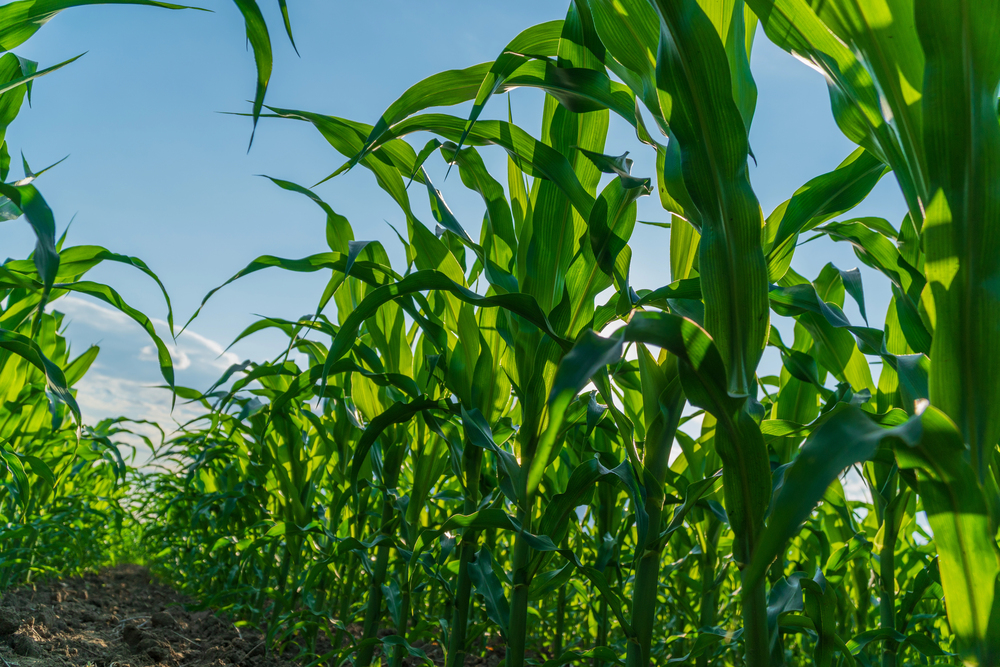
Traditionally, row spacing was 70 to 90 centimeters. However, research has shown that reducing this spacing to 45 to 50 centimeters can bring advantages, depending on the hybrid, soil conditions, and production system. This is currently the most widely adopted spacing, and its variation will depend on the planter spacing. With this reduction, you can:
- Better weed control: plants grow closer together, closing the space between rows more quickly and reducing the growth of invasive plants.
- Better use of soil: uniform distribution of plants allows for better nutrient absorption and moisture conservation.
Spacing between plants:
In the row, the ideal distance will vary, considering factors such as desired plant density, hybrid characteristics, soil fertility, and water availability in the area. This adjustment ensures that each plant has enough space to develop properly.
What are three strategies that ensure good plantability?
To achieve excellent planting results, you should focus on three main strategies that improve corn plantability:
1. Correct calibration of the seed drill
The machine is responsible for depositing the seeds in the soil. If it is not properly calibrated, the entire corn planting process is compromised. Regularly check that the seeder is configured for the type and size of seed you are using. Check discs, springs, gears, and sensors before starting planting. A constant and moderate speed is also essential, as very high speeds reduce the accuracy of seed placement and directly compromise plantability.
2. Proper soil preparation
Ideally, the soil should be well leveled, with good structure and free of large clods. This ensures better contact between the seed and the soil, promoting germination and uniform seedling development. Well-prepared soil also facilitates root penetration and improves nutrient absorption.

3. Use of quality seeds
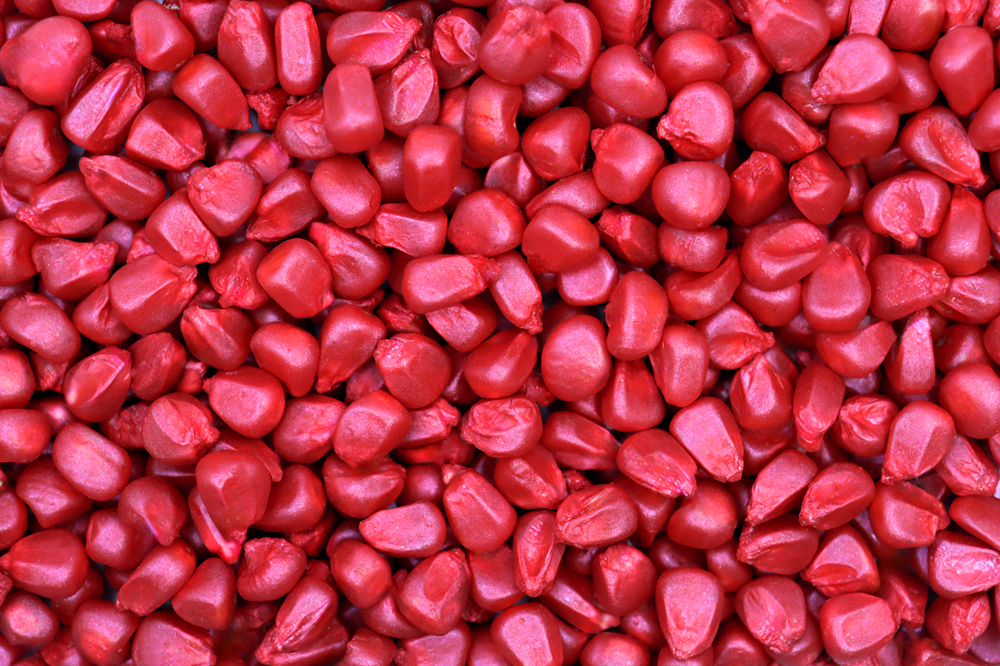
Seeds with high germination rates, certified and well treated, ensure better performance in sowing and crop establishment. Quality seeds have greater vigor and health, which results in better germination rates and, consequently, a more homogeneous stand. Investing in good seeds is investing in the success of your crop.
+ READ MORE: Protecting seeds: technologies and practices for good initial crop establishment
In addition to these three strategies, consider using technologies such as real-time seed drill monitoring and planting maps. These resources help you quickly identify problems and make corrections, preventing productivity losses.