Rice farming is one of the most important agricultural activities in the world. In Brazil, rice cultivation plays a major role in both the economy and food security. In this comprehensive and up-to-date guide for 2026, you’ll learnhow rice is grown, the main farming systems used, andhow long it takes to harvest the grain.
Rice is grown in various regions of Brazil using a variety of production systems.
Among the best-known are paddy rice cultivation, typical of irrigated systems, and rain-fed rice cultivation, which depends on rainfall to grow.
How is rice planted?
Rice cultivation begins with site planning, variety selection, and proper soil preparation. These factors directly influence crop yield.
Before sowing, the soil must be level and fertile. This preparation facilitates germination and aids in plant development.
Preparing the growing area
Soil preparation includes plowing, harrowing, and leveling the area. These steps ensure the ground is even and make it easier to manage the crop.
It is also common to amend and fertilize the soil. The application of lime and fertilizers helps ensure good growing conditions for rice.
Rice planting
Seeding can be done by hand or with farm machinery. In commercial crops, the process is usually fully mechanized.
Typically, between 80 and 150 kg of seeds are used per hectare. The amount varies depending on thefarming systemused.
Treatment for rice seeds
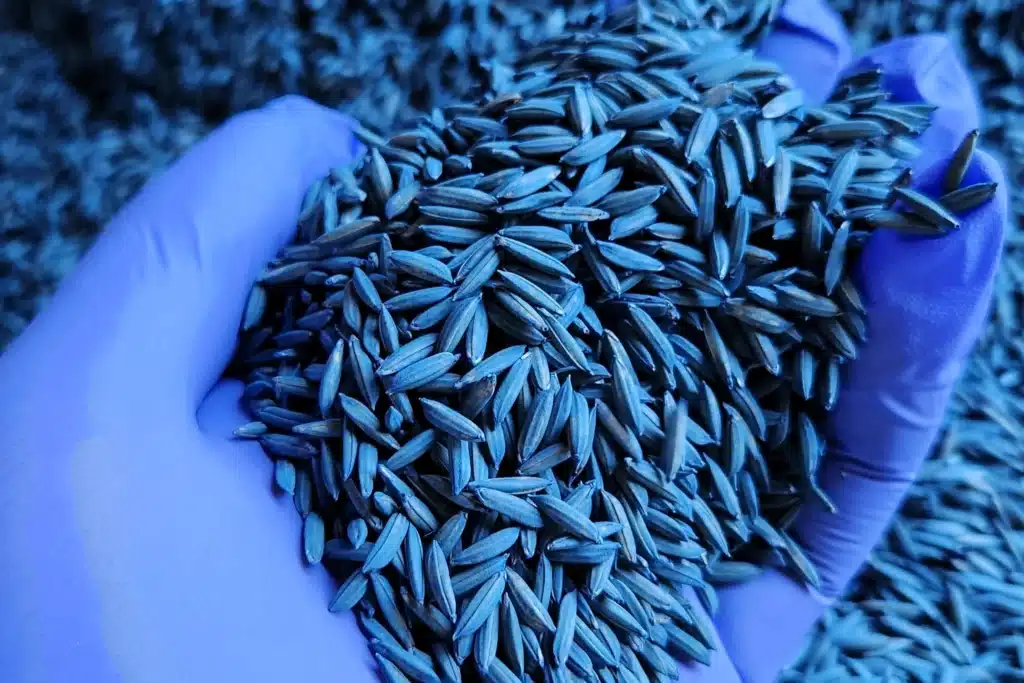
Seed treatment is a widely used technologyforprotectingriceseeds. Seeds with high vigor germinate more quickly and uniformly, which promotes the initial establishment of the crop.
Industrial seed treatmentenhances this process by providing protection against pests and diseases from the very start of cultivation.
Why is this important?
The physiological quality of seeds is directly linked to productivity.
For best results, it is important to usetreated seedsand store them properly.
It is also essential to sow the seeds under the right conditions. This promotes uniform emergence and improves the crop’s early development.
These practices improve planting efficiency and contribute to better results in rice cultivation.
What farming methods are used?
There are two main systems used in rice cultivation in Brazil.
1. Irrigated system
- Uses a constant water flow;
- Predominant in the southern region;
- It offers high productivity.
2. Rainfed system
- It depends on the rainfall pattern;
- Common in the Midwest;
- It has a lower initial cost.
The rain-fed system requires well-drained soils and proper climate planning.
What is the best month to plant rice?
The best time to plant rice varies depending on the climate and the growing region. Temperature and water availability are key factors.
In the Brazilian agricultural calendar,planting begins as soon as favorable weather conditions set in.
Southern Region
In the southern part of the country, planting generally takes place between September and November. This period offers good sunlight and suitable temperatures.
According to Conab, the region accounts for a large portion of Brazil's rice crops,particularly in Rio Grande do Sul.
Midwest and North
In these regions, planting usually takes place between October and December. This period coincides with the start of the rainy season.
Rain helps with the crop's early development and reduces the risk of crop failure.
Factors that influence planting
Several factors determine the ideal time to sow:
- Soil temperature;
- Water availability;
- Variety used;
- Rainfall pattern.
Choosing the right time increases the chances of a productive harvest.
How long does it take from planting to harvesting rice?
The growing cycle varies depending on the variety grown and the production system used.In Brazil, it typically lasts a few months.
For most crops, the full growing cycle lasts between 100 and 150 days.
Stages of crop development
The growth of rice occurs in several key stages.
1. Germination and emergence
Germination and emergence occur a few days after sowing. This process usually takes between 5 and 10 days.
2. Vegetative growth
During this stage, the plant develops leaves and tillers. This stage largely determines the crop’s yield potential.
3. Formation of panicles
The plant begins to form the structures where the grains develop. Anadequate supply of nutrients is essential.
4. Maturation
The grains reach the ideal stage for harvesting. The plant naturally reduces its moisture content during this final stage.
When is the best time to harvest?
Harvesting takes place when the grains have a moisture content of about 20%. This level reduces losses and facilitates storage.
On commercial farms,harvesters are used to speed up the process.
Why is rice grown in water?
Hydroponics is a traditional technique used in irrigated farming. This method creates ideal conditions for plant growth.
The water film helps control weeds and improves the growing environment.
Invasive plant control
The presence of water inhibits the growth of various weeds. This reduces competition for nutrients and light.
With fewer invasive plants, crops tend to be more productive.
Improved nutrient availability
Water helps keep nutrients available in the soil. This promotes uniform plant growth.
This environment also helps keep the soil temperature more stable.
Natural adaptation of rice
Rice is naturally adapted to flooded environments. Its roots are able to absorb oxygen even in waterlogged soil.
As a result, hydroponics has become one of the most efficient techniques in agriculture.

FAQ on Rice Farming
Does rice farming always require water?
No. Rice can be grown using either an irrigated or rain-fed system. In irrigated cultivation, water remains in the field for part of the growing cycle. In rain-fed cultivation, however, crop development depends on rainfall, soil moisture, and well-planned management.
Which region produces the most rice in Brazil?
The Southern region leads the way in rice cultivation in Brazil, with Rio Grande do Sul standing out in particular. This is due to the favorable climate, a long tradition of rice farming, and the widespread use of irrigation systems. These factors help maintain high productivity and ensure more consistent yields.
How much rice does one hectare produce?
Yields per hectare of rice vary depending on the cultivar, climate, management practices, and cropping system. In irrigated areas, yields tend to be higher. In Rio Grande do Sul, for example, irrigated rice reached an average of 9,044 kg/ha in the 2024/25 harvest,according to the Rio Grande Rice Institute (IRGA). In rainfed rice, however, yields tend to fluctuate more, as they depend on rainfall and soil conditions.
Can rice be planted at any time of year?
No. Rice planting must follow each region’s agricultural calendar. Temperature, rainfall, sunlight, and water availability directly influence crop development. Therefore, choosing the right time to sow is essential for reducing risks and improving yield potential.