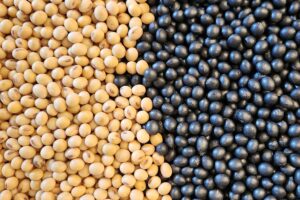
Brazilian soybean production is expected to reach 174.9 million metric tons in 2026, a new record in the historical series compiled by the Brazilian Institute of Geography and Statistics (IBGE). This volume is part of a national harvest of cereals, legumes, and oilseeds estimated at 353 million metric tons in the July survey.
The volume of production requires attention to a stage that precedes the seed’s arrival in the field: processing large quantities while maintaining consistent treatment standards. For the seed industry, advances in soybean production increase the demand for processes capable of maintaining a consistent standard at every stage of Industrial Seed Treatment (IST).
Record-breaking volume increases pressure for efficiency
As the volume processed increases, the repeatability of operations becomes more important. At TSI, this means striving for uniformity in product application, thorough seed coating, proper drying, and smooth flow throughout the process.
Industrial seed treatment takes place in a controlled environment and uses specialized equipment to apply the various treatment components. Among the technologies used are polymers and desiccant powders, which are used to coat the seeds.
For Laborsan Agro, which specializes in film coating technology, the increase in soybean production requires attention to processing capacity and operational consistency.
“Given the volume of soybeans produced in Brazil, maintaining treatment standards on a large scale requires greater attention from the industry. The focus is on processing large quantities of seeds while maintaining quality and consistency throughout the entire operation,” says Robson Soares, Agronomy and Demand Generation Manager at Laborsan Agro.
Polymers and drying powders contribute to standardization
Within TSI, polymers are used to coat seeds and can contribute to factors such as product adhesion, coverage, and the strength of the resulting film.
Drying powders complement this step and help dry and convey the seeds after treatment—important features in operations that need to maintain a constant and uniform pace, even when handling large volumes.
In Laborsan Agro’s film coating technology, the LabFix line of polymers works in conjunction with LabSec drying powders. According to the company, the technology enhances characteristics such as coating, drying, abrasion resistance, and flowability in industrial processes.
These attributes become increasingly important as the quantity of processed seeds increases, since, on an industrial scale, small variations that recur across batches can affect the consistency and pace of the operation.
“In an industrial seed treatment line, the goal is to ensure process repeatability and maintain consistency. Polymers and drying agents are integral to this process because they play a key role in critical aspects of the operation, such as coating, adhesion, drying, and seed flow,” adds Robson Soares, Agronomy and Demand Generation Manager at Laborsan Agro.

About Laborsan Agro
Laborsan Agro is a Brazilian company with nearly 30 years of experience, specializing in the development and marketing of technologies for the agribusiness inputs sector. Its portfolio includes polymers and drying powders for seed coating using film coating technology, as well as other solutions designed for seed treatment and processing.