Rice cultivation is an essential activity in Brazil and can be carried out in irrigated, upland, or organic systems. This comprehensive guide covers every step, from soil analysis and seed selection to water management, pest control, and harvesting. It also addresses productivity, profitability per hectare, crop cycle time, and best practices to ensure crop quality and sustainability.
What is the rice cultivation process like?
Rice cultivation begins before planting. Farmers need to assess the soil, select the plot, adjust the acidity, plan fertilization, and choose seeds suited to the chosen system.
In Brazil, rice is grown primarily using two methods: irrigated and upland, the latter of which is also associated with the rain-fed system. According to Embrapa, irrigated rice, with controlled irrigation, accounts for the majority of national production.
The main steps are:
- Soil analysis and preparation;
- Selection of seeds;
- Seed treatment or protection;
- Sowing;
- Water management;
- Weed, pest, and disease control;
- Harvesting, drying, and storage.
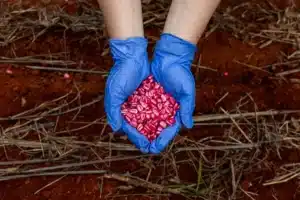
Seed quality directly affects crop uniformity. That’s why it’s important to be familiar with best practices for protecting seeds before planting.
What are the different types of rice cultivation?
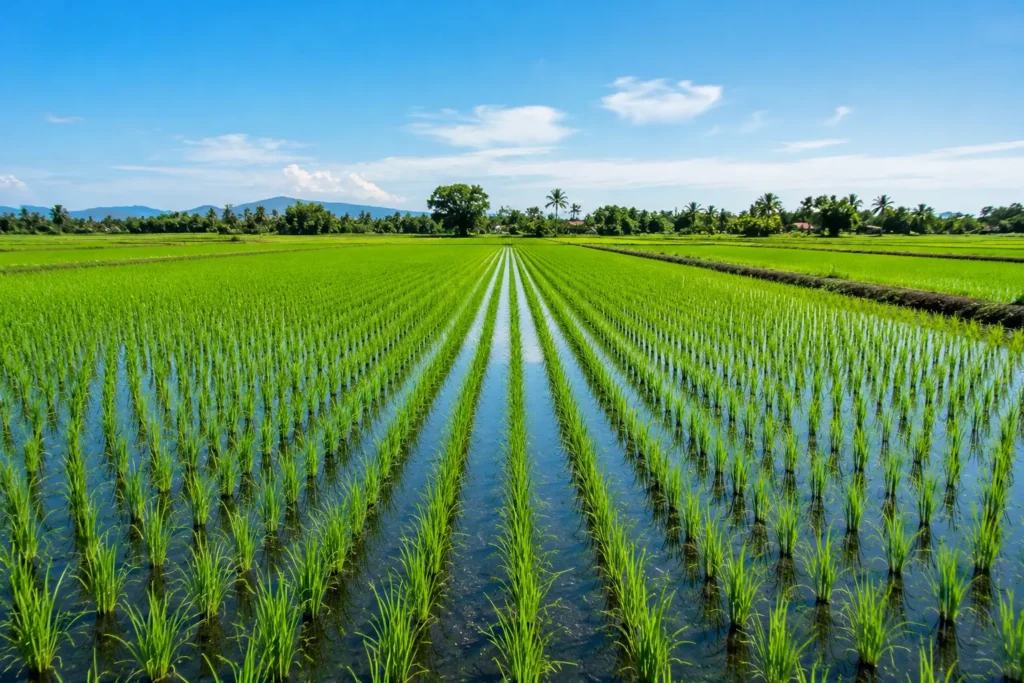
Irrigated rice cultivation involves controlling water in the field, typically in floodplain areas. This system usually yields high productivity but requires more infrastructure, land leveling, and careful irrigation management.
The FAO (Food and Agriculture Organization, the UN's food agency) explains that rice-producing ecosystems can be classified according to soil and water conditions, including irrigated and rain-fed systems.
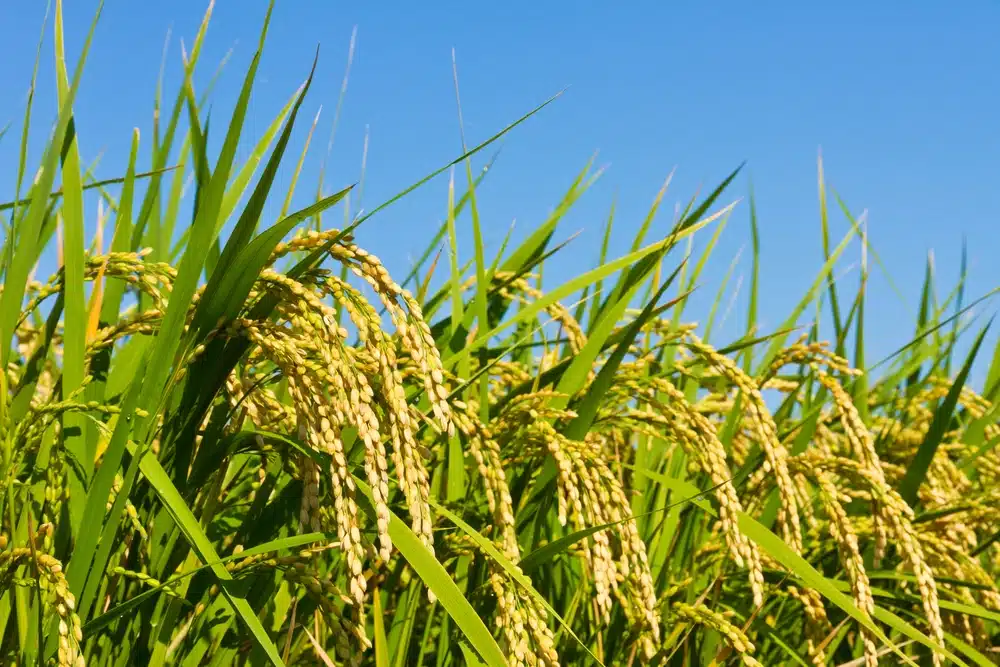
Upland rice cultivation, on the other hand, depends more on rainfall. It is common in upland areas and requires attention to soil fertility, moisture retention, and the selection of well-adapted cultivars.
According to Embrapa, upland rice can be grown with supplemental sprinkler irrigation or without irrigation, depending on rainfall.
There is also organic rice farming, which reduces or eliminates the use of synthetic chemicals and promotes agroecological practices.
In this system, planning must take into account certification, soil management, weed control, and marketing strategies.
How can you prepare seeds and improve plantability in rice cultivation?
The seed is the starting point for farming. Poorly handled, damaged, or irregular seeds can lead to crop failure, competition among plants, and reduced land productivity.
Seed treatment helps protect the early stages of the crop from problems that arise shortly after sowing.
Another key factor is plantability—that is, the ability to distribute seeds evenly in the soil.
In some crops, technologies such as seed pelleting help improve seed size, shape, and distribution.
For rice, the ideal approach is to combine high-quality seeds, proper seeder calibration, and well-prepared soil. This foundation reduces failures and improves the crop’s initial establishment.

What is the profit from 1 hectare of rice?
The profit from 1 hectare of rice depends on yield, the price per sack, production costs, the farming system used, and management efficiency. There is no fixed figure that applies to all regions.
To estimate, use this simple formula:
Profit = gross revenue per hectare – total cost per hectare
Gross revenue is calculated by multiplying the number of bags harvested by the price received per bag. Costs, on the other hand, include seeds, fertilizers, pesticides, irrigation, machinery, labor, drying, and transportation.
Conab (National Supply Company) provides historical crop data, including information on planted area, production, and yield, which is useful for monitoring the rice market.
How long does it take to grow rice?
The growing period varies depending on the cultivar, climate, and production system. In general, many cultivars take between 100 and 150 days from sowing to harvest.
In practice, the choice of cultivar affects the crop calendar. Therefore, growers should follow the recommended growth cycle for the selected variety and align that timeline with the region’s planting window.
When planning, the producer should consider:
- Ideal planting window;
- Crop cycle duration;
- Water availability;
- The right time to harvest;
- Frame for drying and storage.
Harvesting at the right time prevents losses. Grains that are too moist increase drying costs, while excessive delays can lead to grain shattering, lodging, and a decline in quality.
FAQ – Frequently Asked Questions About Rice Farming
What is the best soil for growing rice?
Rice adapts to different soils, but the ideal conditions depend on the farming system. In irrigated systems, flat, floodplain areas facilitate water management. In rain-fed systems, deep, fertile soils with good moisture retention help reduce risks during droughts.
Is irrigated rice farming better than rain-fed rice farming?
Not necessarily. Irrigated farming generally offers greater control and productivity, but it requires infrastructure and investment. Rainfed farming can be a viable option in highland areas, provided there is a good choice of crop varieties, proper soil management, and planning to mitigate climate risks.
What is the biggest factor reducing rice productivity?
Among the main factors are low-quality seeds, poorly amended soil, planting errors, weeds, diseases, pests, and improper water management. In many cases, minor mistakes early in the growing season compromise plant development and reduce crop yields.
Is it possible to grow organic rice on a large scale?
Yes, but it requires organization, technical assistance, and rigorous management. The organic system must balance soil fertility, weed control, certification, and marketing with planning, cooperation, and technical oversight.
When is the best time to plant rice?
The best planting season varies depending on the region, climate, and production system. Growers should follow agricultural zoning guidelines, observe the recommended planting window for the crop, and ensure water availability. Planting outside the ideal season increases the risk of losses and reduced quality.
How do I get started with rice farming?
The first step is to survey the area, analyze the soil, and determine whether the system will be irrigated, rain-fed, or organic. Next, choose suitable seeds, plan your costs, arrange for machinery, and seek technical guidance to avoid common mistakes at the start of production.