Growing corn requires planning from seed selection through harvest. In this comprehensive guide, you’ll learn how corn cultivation works, how long the growing season lasts, when to use irrigated corn cultivation, how to grow green corn, and what care practices help improve crop development.
How does corn farming work?
Corn cultivation begins with soil analysis, adjusting soil acidity, selecting seeds, and determining the planting season. This is followed by sowing, fertilization, weed management, pest control, and crop monitoring.
In Brazil, corn is produced during different seasons, primarily during the first and second harvests. According to Embrapa, national production is characterized by planting duringtwo main seasons, depending on the region and rainfall patterns.
The basic steps are:
- Soil analysis and preparation;
- Selection of seeds;
- Adjusting the seed drill;
- Planting in the right window;
- Fertilization and management;
- Crop monitoring;
- Harvesting and storage.
The use ofseed treatmentshelps protect the early stages of the crop, particularly against problems that hinder germination and plant establishment.
How to Plan for Corn Production in Brazil?
Corn cultivation in Brazil varies depending on climate, region, technology, and production goals. There are crops grown for grain, silage, and fresh corn, each with different management practices and harvest times.
Conab tracks the Brazilian grain harvest and monitors crops such as corn, soybeans, rice, wheat, and sorghum. This data helps producers understand the planted area, production, and productivity at different stages ofthe Brazilian grain harvest.
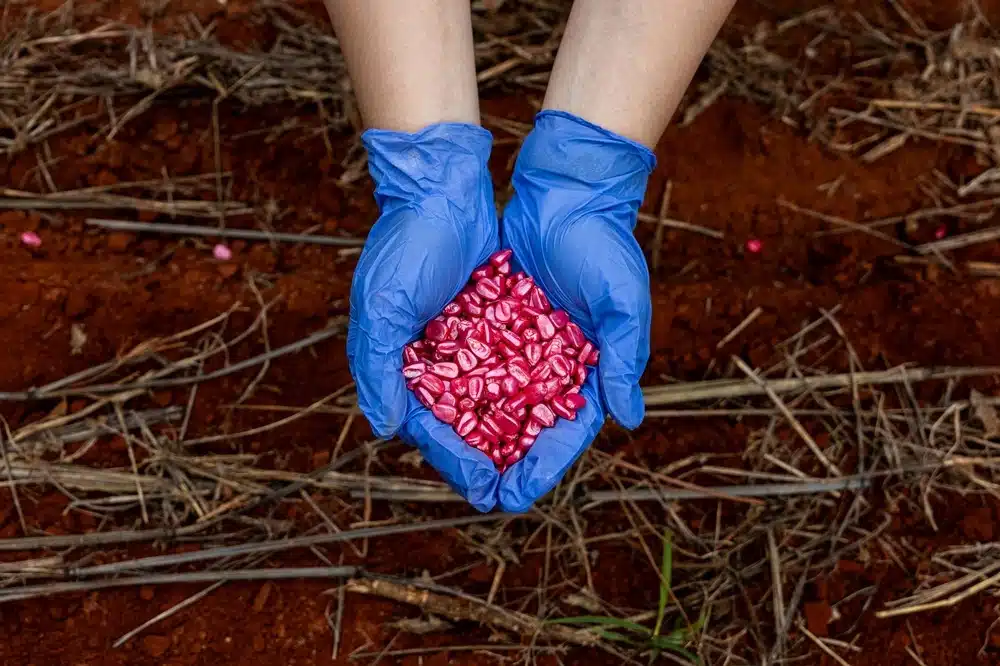
For beginners, planning should start with simple questions: What will the corn be used for? Which types of corn seeds (hybrids or varieties) are most suitable? What is the condition of the soil? And which planting window minimizes weather-related risks?
It is also important to considerplantability, since the uniform distribution of seeds reduces gaps, minimizes competition among plants, and promotes a more uniform crop.
How long does it take to grow corn?
The growing season for corn depends on the type (hybrid or variety), temperature, elevation, planting season, and the purpose of production. In grain crops, the growing cycle can vary widely, depending on the seed selected and growing conditions.
During its life cycle, the plant goes through emergence, vegetative growth, flowering, grain filling, and maturation. Each stage requires attention, especially regarding the availability of water and nutrients.
That’s whyit’s not enough to just look at the number of days. Growers need to monitor the plant’s development, the weather, and the optimal harvest time.
How many kilograms of corn does it take to plant 1 hectare?
The amount of seed needed to plant 1 hectare depends on the desired plant density, the weight of the seeds, the row spacing, and the recommended planting rate for each type of corn seed (hybrids or varieties).
Therefore, there is no single figure that applies to all crops. The calculation is based on the plant population per hectare, following the supplier’s guidelines.
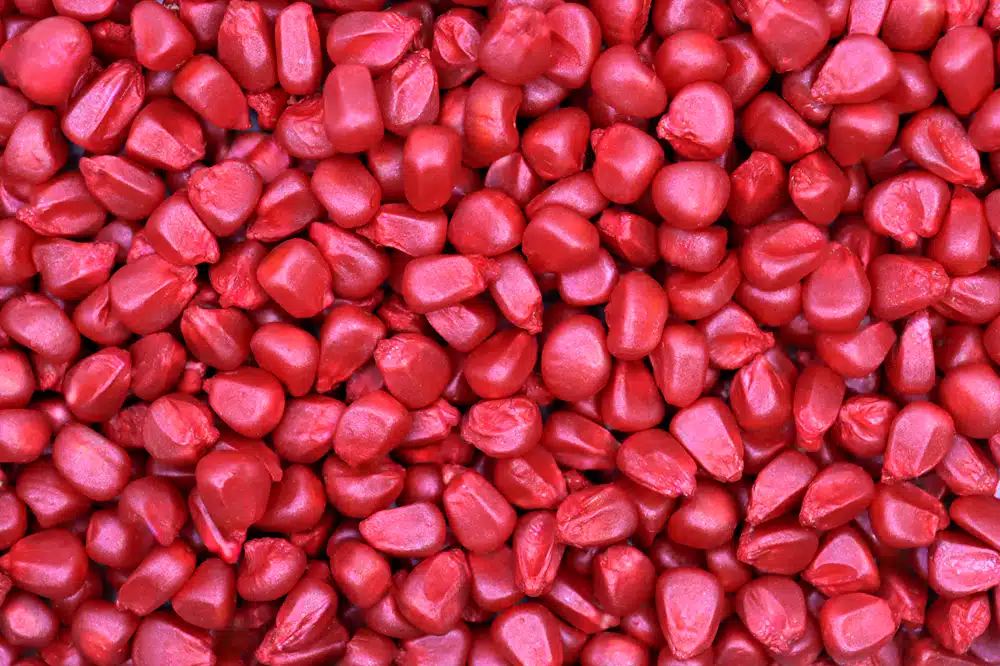
The quality of the seeds also affects the outcome. Before planting, it’s worth learning how toprotect the seedsto reduce failures early in the growing season.
A poorly adjusted seed drill can waste seeds or create uneven spacing.Proper distribution improves land utilizationand promotes a more uniform crop.
How long does it take for a corn plant to start producing?
The corn plant begins to form reproductive structures after the vegetative stage. First, the tassel and the ear appear; then pollination occurs, followed by grain filling.
In many crops, flowering occurs about 50 to 70 days after emergence, but this varies depending on the type of seed and the climate. Harvesting, however, takes place later, when the grain reaches the appropriate stage for its intended use.
Embrapa reports that, for green corn cultivation, the time the crop remains in the field until harvest is approximately 90 days in the summer and 100 days in the winter, depending on thegreen corn production system.
For dry grains, the producer waits for physiological maturity and the appropriate moisture content.Harvesting too early increases drying costs; harvesting too late can increase field losses.

How does irrigated corn farming work?
Irrigated corn cultivation uses supplemental water to reduce losses caused by drought. It is common in areas with greater technological control and can help stabilize production.
Irrigation does not mean watering indiscriminately. Growers need to consider soil conditions, the plant’s growth stage, climate, evapotranspiration, and water availability. Over-irrigation can also cause problems, such as soil compaction and increased disease pressure.
Embrapa emphasizes that improving water use efficiency is important for increasing yields by making better use of water resources inirrigated corn systems.
This system may be worth considering, but it requires investment, energy, maintenance, and technical expertise. For beginners, it’s best to compare costs, climate-related risks, and expected returns.
How does green corn cultivation work?
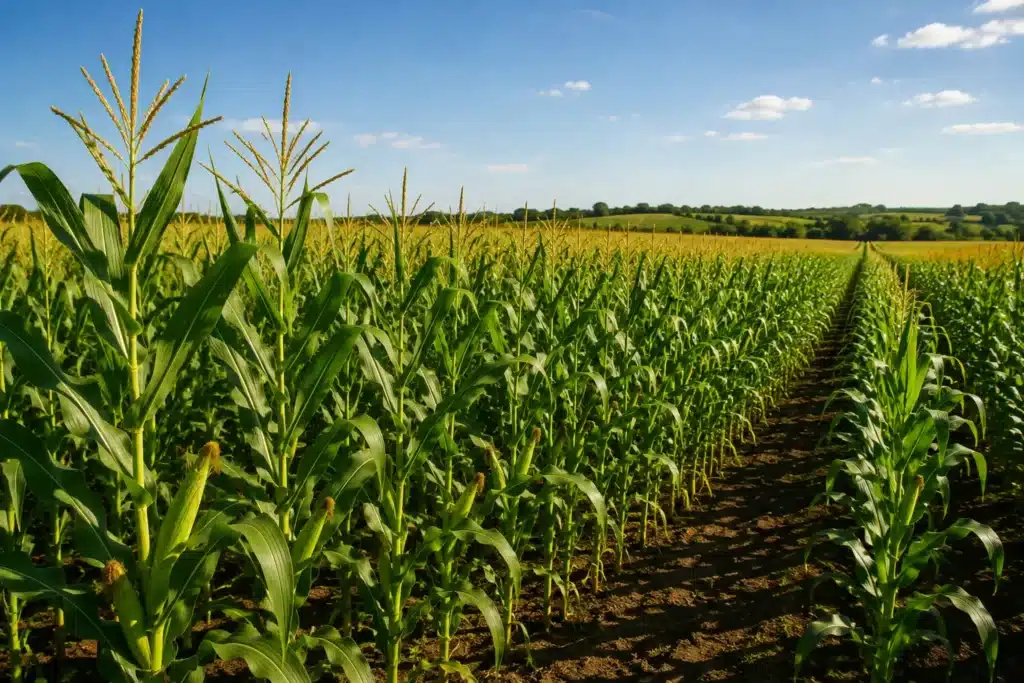
The cultivation of green corn focuses on harvesting the ears while the kernels are still soft, before they are completely dry. For this reason, the harvest time differs from that of dry grain corn.
The harvest must be quick and well-planned, because green corn loses quality once it is picked from the plant. Ideally, production should take place close to the consumer market or be supported by well-organized logistics.
Farmers should choose the appropriate type of seed, ensure crop uniformity, and monitor the stage of development of the ears.Visual quality and flavor greatly influence sales, as is the case with green corn
In this system, irrigation, balanced fertilization, and pest control help produce more uniform ears. Careful management increases the commercial yield.
FAQ – Frequently Asked Questions About Corn Farming
What is the best soil for growing corn?
Corn prefers well-drained, fertile, deep soils with good nutrient availability. Before planting, it is best to conduct a soil analysis and adjust the pH, phosphorus, potassium, and organic matter levels as needed. Compacted or poor soil reduces root growth and limits yield.
Does corn need a lot of water?
Corn requires an adequate water supply, especially during flowering and grain filling. A lack of water during these stages can significantly reduce yields. However, excess moisture also damages roots and complicates management, so irrigation management—when used—must follow technical guidelines.
What has the greatest impact on corn yields?
The main factors are seed quality, soil fertility, climate, plant population, pest control, weed management, and planting time. Problems early on reduce plant density and can compromise the yield potential of the entire crop.
Is it possible to grow corn on a small farm?
Yes, corn can be grown on small farms, primarily for consumption, local sale, silage, or as green corn. Even on smaller plots, it is important to plan all aspects of crop management, including soil preparation, seeds, fertilization, and harvest. Farmers should also assess the market, costs, and available labor.
What is the difference between fresh corn and dried corn?
Green corn is harvested before it is fully mature, when the kernels are still tender and ready for consumption. Dry corn remains in the field longer, until it reaches the harvest stage for grain. Each purpose requires different types of corn seeds (hybrids or varieties) and different management practices.