Rice farming requires planning, selecting the right location, soil preparation, water management, high-quality seeds, and harvesting at the right time. In this comprehensive guide, you’ll learn how rice farming works in Brazil, the differences between dry-field rice farming and paddy rice farming, as well as costs, productivity, and essential care practices.
Rice is one of the staple foods of the Brazilian diet. Therefore, learning about its cultivation helps beginners better understand the agricultural sector, crop production, and the factors that influence the supply and price of rice.
In this article, you'll also learn what a rice paddy is called, how the harvest works, and what practices help improve productivity.
What is a rice paddy?
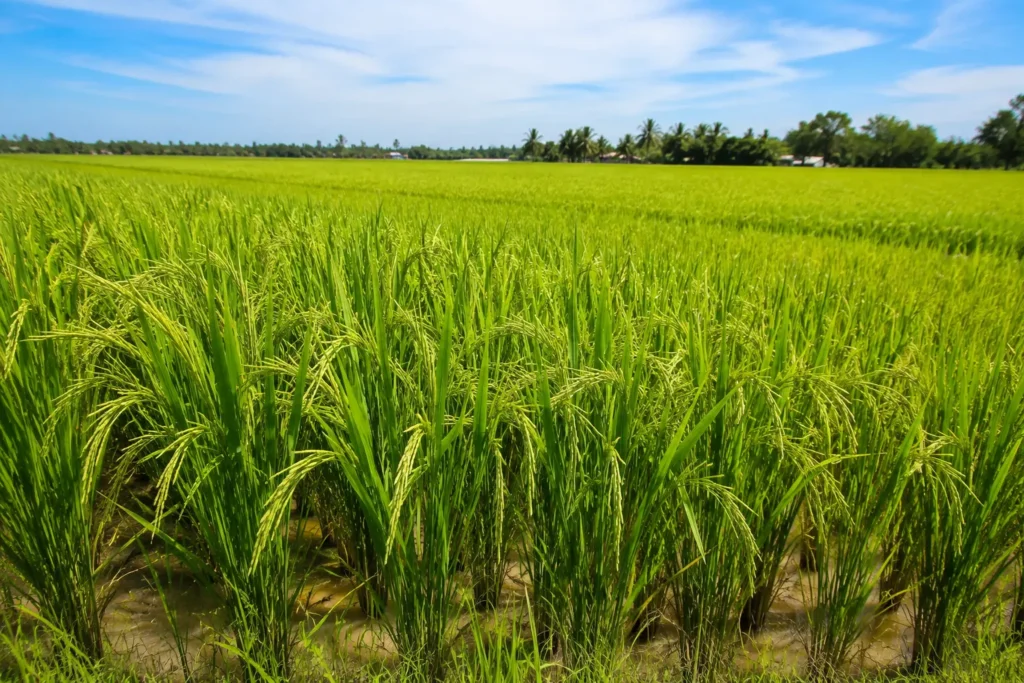
A rice paddy is an agricultural area used to grow rice, from sowing to harvest. This area may also be called a rice field or rice paddy.
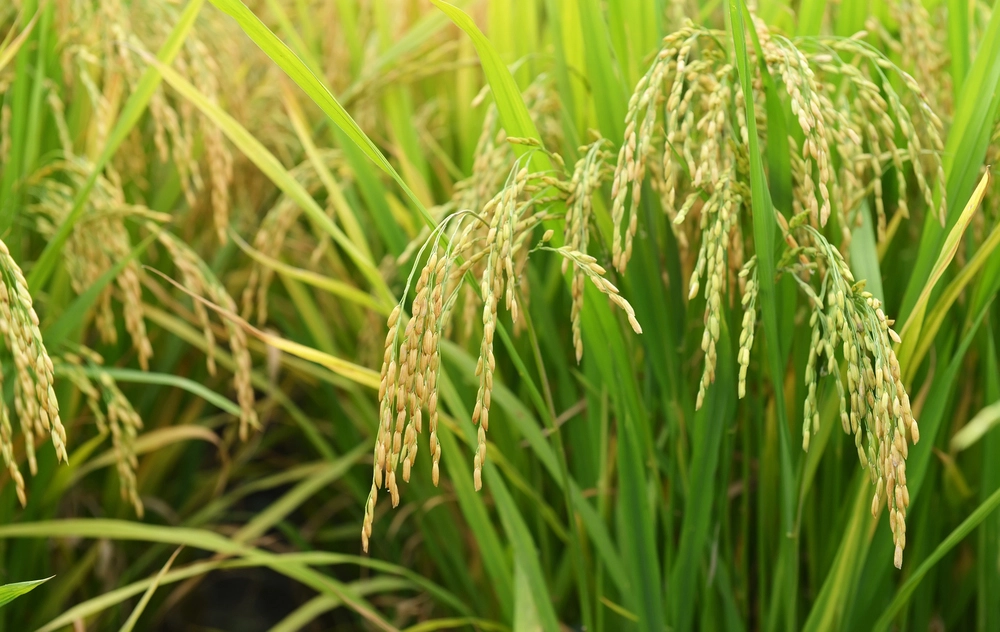
Rice is a grass cultivated for grain production. After harvest, it undergoes drying, processing, and grading before reaching the consumer.
The most common term for an area planted with rice is “rice paddy.” In technical terminology, expressions such as “rice field” and “rice-growing area” (or “rice cultivation area”) are also used.
How does rice farming work in Brazil?
Rice cultivation in Brazil is carried out primarily using two systems:irrigated riceand upland rice. The choice depends on the region, the topography, the soil, and the availability of water.
In Brazil, most of the rice produced comes from irrigated rice fields, especially in the southern part of the country. Upland rice accounts for a smaller share, but is still grown in various regions.
The South is the main producing region, with Rio Grande do Sul standing out in particular. The state combines flat terrain, technical expertise, and an infrastructure well-suited for irrigated farming.
In the 7th Survey of the 2025/26 Grain Crop, Conab estimated Brazilian rice production at approximately 11.1 million metric tons, down from the previous crop year.
What are the different types of rice cultivation?
As mentioned earlier, there are two main types of rice farming: the irrigated system and the upland system. Each has its own advantages, limitations, and specific care requirements.
What is rice farming in water like?
Flood irrigation is an irrigated farming system. In this system, the crop receives water in a controlled manner, forming a water table over the soil during part of the crop cycle.
This model helps maintain more stable moisture levels and can contribute to the management of certain weeds. Nevertheless, it requires integrated pest management to prevent yield losses.
On the other hand, it requires more infrastructure. The producer needs a leveled area, canals, pumps, control of water inflow and outflow, and planning to prevent waste.
What is dryland rice farming like?
Dryland rice farming is a form of upland cultivation, also known as rain-fed rice farming. In this system, there is no permanent layer of water covering the crop.
Cultivation depends more on rainfall or supplemental sprinkler irrigation. Therefore, the planting season and the choice of cultivar are crucial for reducing risks.
Embrapa reports that the total water requirement for upland riceranges from approximately 400 mm to 700 mm, depending on the cultivar, region, and planting season.
How to Plant Rice, Step by Step?
To start a crop, it is best to follow a specific technical sequence. This prevents mistakes early in the growing season and improves the chances of a good yield.
1. Choose the correct area
The area should have suitable soil, good fertility, and conditions suitable for mechanization. In irrigated rice farming, flat land facilitates leveling and water control.
When growing upland rice, special attention should be paid to rainfall, soil compaction, organic matter, and the area’s history. Poorly amended soils reduce the crop’s potential.
2. Analyze and prepare the soil
A soil analysis shows which nutrients are available and what corrections are needed. It provides guidance on liming, fertilization, and soil preparation before planting.
In irrigated rice farming, leveling the field is a very important step. In upland areas, however, conservation practices help maintain moisture and reduce erosion.
3. Choose the right cultivar
The cultivar must be suited to the climate, soil, cultivation system, and commercial objective. Some varieties are recommended for irrigated rice, while others are recommended for upland rice.
It is also important to consider the plant’s growth cycle, disease resistance, grain quality, and yield potential. The wrong choice can limit the entire crop.
4. Protect the seeds before planting
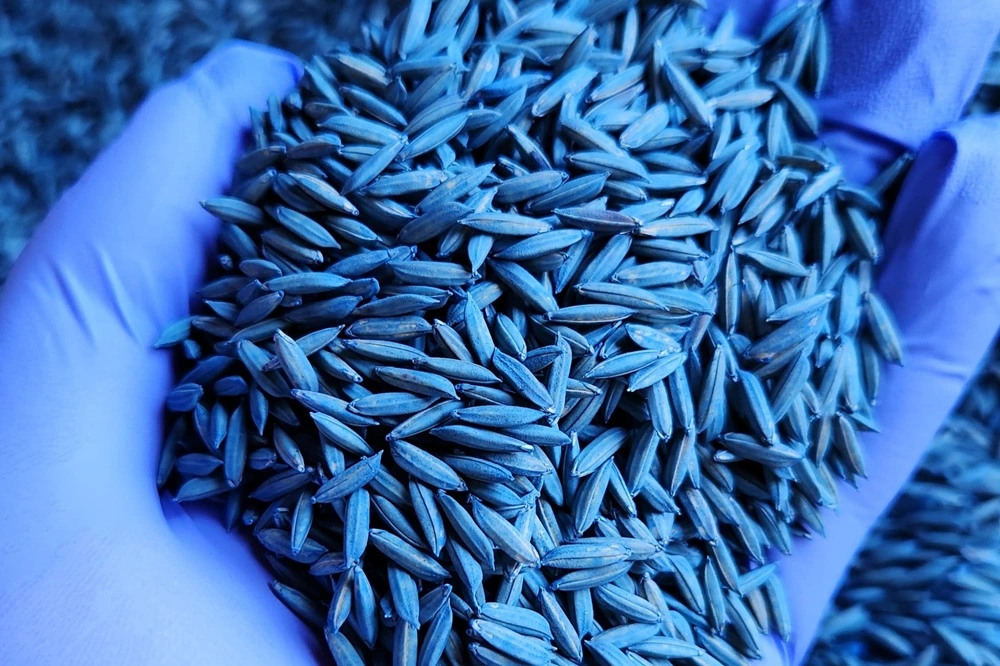
Before planting, farmers need to consider howto protect the seeds. This step helps reduce initial failures and improves plant establishment.
The use oftreated seedcan help protect against early-stage pests and diseases. This practice must follow technical guidelines and use products registered for the crop.
5. Sow the seeds carefully
Seeding can be done in rows or by broadcast, depending on the system and the equipment. The seeding depth must be carefully adjusted to ensure good emergence.
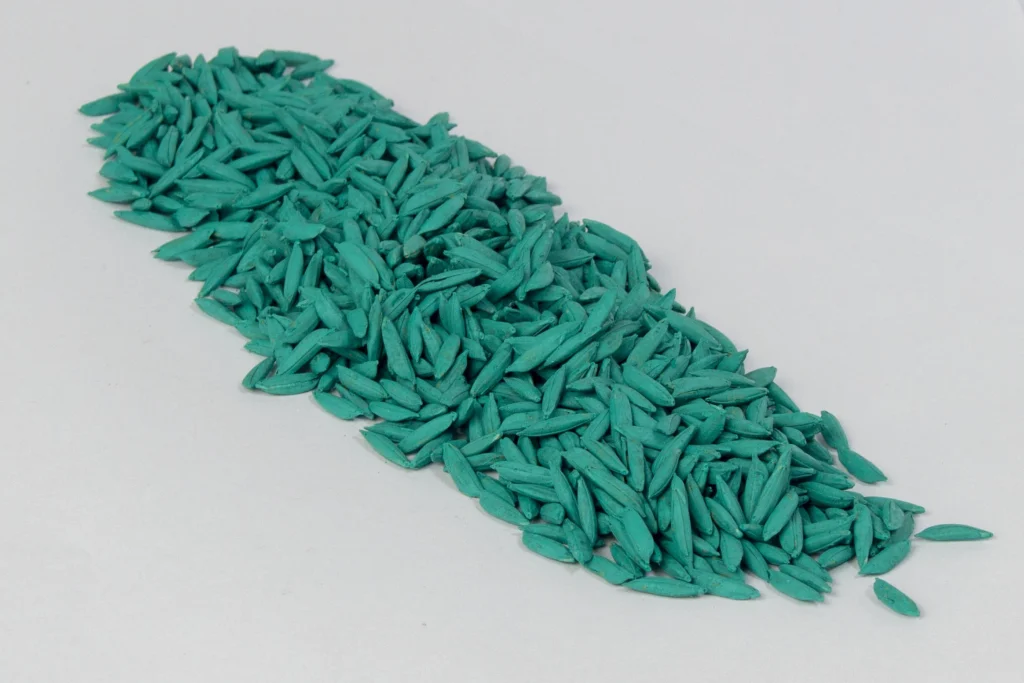
Proper planting density reduces crop failure, prevents overcrowding in certain areas, and improves the crop’s utilization of light, water, and nutrients.
In irrigated rice farming, sowing may take place before the water is introduced, depending on the system used. Irrigation is then adjusted according to the crop’s stage of development.
6. Use water wisely
In irrigated rice cultivation, water must be carefully managed. Irrigation failures can harm the roots, tillering, panicle formation, and grain filling.
In dryland rice farming, the focus is on conserving soil moisture. Planting at the right time and maintaining good soil cover are practices that help reduce losses.
7. Control weeds, pests, and diseases
Weeds compete with rice for light, water, and nutrients. Control measures should begin early, before this competition reduces crop yield.
Pests and diseases also need to be monitored. The decision to control them should take into account the level of infestation, the plant’s growth stage, and guidance from a technical professional.
8. Harvest at the right time
Harvesting should take place when the grains have reached the proper stage of maturity. Harvesting too early, when moisture content is inadequate, can have many negative consequences at the end of the harvest, such as increased grain breakage, chalky grains, and high drying costs, among others.
Harvesting too late is also bad. It can increase field losses, grain breakage, and moisture problems, especially during rainy periods.
After harvest, the rice must be dried and stored properly. High humidity promotes spoilage and a loss of commercial quality.
When is the best time to plant rice?
The best time to plant varies depending on the region, cultivation system, and climate. In general, planting should coincide with good water availability and favorable temperatures.
In the South, the irrigated rice planting schedule typically follows regional planting windows. These dates help reduce the risks of cold weather, excessive rainfall, and harvest problems.
For upland rice, rainfall plays an even more critical role. Planting outside the optimal window increases the risk of water stress during key stages of the plant’s growth.
Before planting, farmers should consult local technical advisors and review the region’s agricultural zoning and climate data. This decision reduces risks and improves planning.
How much rice does 1 hectare produce?
The yield per hectare of rice varies widely. It depends on the farming system, soil, cultivar, water management, pest control, climate, and the technology used.
Well-managed irrigated areas tend to produce more than rain-fed areas. However, they also require greater investment in infrastructure, energy, labor, and water management.
CONAB's surveys compile data on rice acreage, production, and productivity by crop year; therefore, they should always be consulted using the most recent data.
There is no single standard for crop yield that applies to every farm. The best approach is to compare regional data and consult with experts who are familiar with local conditions.
What is the profit from 1 hectare of rice?
The profit from 1 hectare of rice depends on several factors, such as crop yield, the selling price of the grain, the cost of inputs, labor, irrigation, the use of machinery, and harvesting and storage expenses.
Therefore, there is no single figure that applies to all producers. Two areas of the same size can yield very different results, depending on the farming system and the efficiency of management.
The basic formula is:Profit = gross revenue – total cost
Gross revenue is calculated by multiplying the quantity produced by the price received. Total cost, on the other hand, includes all expenses necessary to produce, harvest, dry, store, and market the rice.
To estimate profits more accurately, producers should use actual data from their own farms, check current prices in the region, and consider seeking specialized technical or accounting assistance.
What precautions can be taken to prevent damage to rice crops?
The first thing to keep in mind is not to plant without a plan. This process requires an investment, and mistakes made early on can jeopardize the entire cycle.
It is also essential to usehigh-quality seeds. Poor-quality seeds result in uneven emergence, crop failures, and difficulties in weed control.
Another important precaution is to monitor the area frequently. The sooner the grower identifies pests, irrigation problems, or nutrient deficiencies, the less damage is likely to occur.
Here are some essential precautions:
- Conduct a soil test before planting;
- Choose a crop variety suitable for the region;
- Use high-quality seeds and treated seeds;
- Ensure proper planting conditions during sowing;
- Plant at the right time;
- Control water, weeds, and pests;
- Plan for drying, storage, and sale.
How can rice productivity be improved?
To improve productivity, the plantation must be treated as a system. There’s no point in investing in one stage and neglecting the others.
Farmers must combine good genetics, amended soil, well-managed water, protected seeds, balanced fertilization, and harvesting at the right time.
Technology also helps. Well-maintained machinery, crop monitoring, and technical assistance.
The most important thing is to measure results. Comparing productivity, costs, and profit per hectare helps farmers correct mistakes and make better investments for the next harvest.
FAQ – Frequently Asked Questions About Rice Farming
What is the rice planting process like?
Rice cultivation begins with site selection, soil analysis, soil preparation, cultivar selection, and seeding. It is also important to protect the seeds by using treated seeds when recommended. Next come irrigation management or rainfall forecasting and monitoring, fertilization, pest and disease control, and harvesting at the optimal time.
What is the name of a rice paddy?
The most common name is “rice paddy.” The terms “rice field,” “rice farm,” “rice plot,” or “rice-growing area” (or “rice cultivation area”) are also used. The choice depends on the region and context, but “rice paddy” is the most straightforward and widely used term.
Where is rice grown in Brazil?
Rice is grown in various regions of Brazil, but production is heaviest in the South, particularly in Rio Grande do Sul. It is also grown in Santa Catarina, Tocantins, Maranhão, Mato Grosso, and other states. The system can be irrigated or rain-fed, depending on the climate and available water.
Does dry-land rice farming work?
Yes, dry farming can work when rainfall is well distributed, the soil has been amended, and the crop is suitable for upland areas. Farmers must manage soil moisture, fertilization, and planting conditions. Since there is no permanent water table, the climate-related risk is usually higher.
Is growing rice in water better?
Rice cultivation in water typically allows for better control of moisture and weeds, as well as good yields. However, it requires an irrigation system, land leveling, and investment. It may be more suitable in certain areas, but it is not the best choice for all farmers or regions.
When is the rice harvest?
Rice is harvested when the grains reach the appropriate level of maturity and a moisture content suitable for harvesting. The timing varies depending on the cultivar, planting season, climate, and cultivation system. Harvesting too early or too late can reduce quality, increase losses, and negatively impact economic returns.
What is rice plantability?
Seed placement refers to the ability to distribute seeds evenly in the soil, ensuring the proper depth, spacing, and quantity. In rice cultivation, it influences seedling emergence and the uniformity of the crop. Proper adjustment of the seeder and standardized seeds greatly contribute to this outcome.