With a record harvest, the expansion of soybean production, and growing demand for certified seeds, TSI is now seen as a strategic link between productivity, process quality, and sustainability in the field

In an industry increasingly driven by scale, standardization, traceability, and operational quality, industrial seed treatment has gained importance by contributing to greater process predictability, improved industrial performance, and more efficient use of inputs.
In practice, the discussion is no longer limited to seed protection. The advancement of TSI goes hand in hand with a broader transformation of Brazilian agriculture, in which efficiency, process control, and operational stability have become increasingly critical factors for the supply chain’s performance.
Greater scale, greater demands
Brazil’s 2025/26 grain harvest could reach 356.3 million tons, with soybeans projected at 179.2 million tons, both at record levels,according to Conab(the National Supply Company). At the same time,Brazil projects 48.3 million hectares of soybeans for the 2025/26 season, a trend that is expected to increase demand for certified seeds.
In this same context, the industrial seed treatment (IST) market grew from R$ 1.19 billion in 2021 to a projected R$ 1.76 billion in 2025/26.
This scenario helps explain why seed treatment is no longer viewed merely as a technical step in the pre-planting process but has come to occupy a more strategic role within the agricultural sector.
Operational efficiency is also sustainability
This shift in perception is also directly linked to the ESG agenda. When an industrial process improves application uniformity, reduces waste, enhances treatment adherence, and increases operational stability, it ceases to be merely operational and begins to align with environmental and governance goals.
In other words, sustainability in seed treatment also hinges on process efficiency. Reducing waste, increasing the utilization of inputs, and making operations more predictable are benefits that impact both industrial performance and environmental responsibility.
Brazilian companies are keeping pace with developments in the sector
More than just meeting a technical demand from the market, Brazilian industries involved in TSI are increasingly recognizing this shift: seed treatment is now part of a broader agenda for agricultural transformation. And there is certainly no turning back from this path.
Rather than serving merely as an operational support system, the new TSI has established itself as a tool capable of integrating industrial quality, more efficient use of resources, process safety, and sustainability.
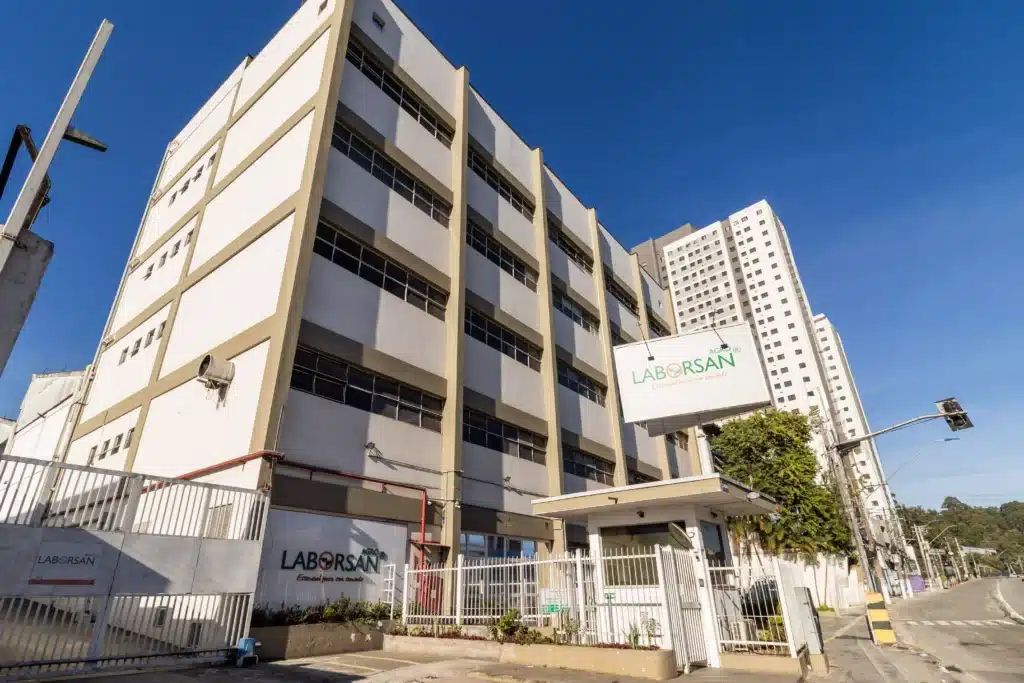
One of the leading examples in Brazil’s agribusiness sector is Laborsan Agro. A leader in the supply of seed treatment inputs, the company has kept pace with market developments by offering solutions focused on TSI and pursuing anESG agendabacked by concrete metrics.
In its firstSustainability Report, Laborsan Agro reported a reduction of approximately 19% in greenhouse gas emissions and a 16.95% decrease in Class I waste generation.
In keeping with this commitment to transparency and continuous improvement, the company is currently developing its second Sustainability Report, covering the year 2025, which will include data such as its first Greenhouse Gas Inventory, also taking into account Scope 3 emissions (indirect emissions occurring throughout the supply chain).
The inclusion of this scope represented a significant step forward in Laborsan Agro’s climate management, broadening our understanding of the value chain’s impact. It revealed that 97% of emissions are concentrated within this scope, highlighting the importance of monitoring the entire production chain.
“Today, industrial seed treatment must be viewed as a strategic tool within the operation. When you gain in standardization, application stability, and better use of inputs, the benefit is not just technical: it also impacts efficiency, sustainability, and the consistency of results in the field,” saysRobson Soares, Agronomy and Demand Generation Manager atLaborsan Agro.
As the Brazilian agricultural sector grows in scale and complexity, the future of seed treatment is likely to be less and less limited to the initial protection of the seed and increasingly linked to the development of a more efficient, technologically advanced agricultural sector that is aligned with ESG goals.